
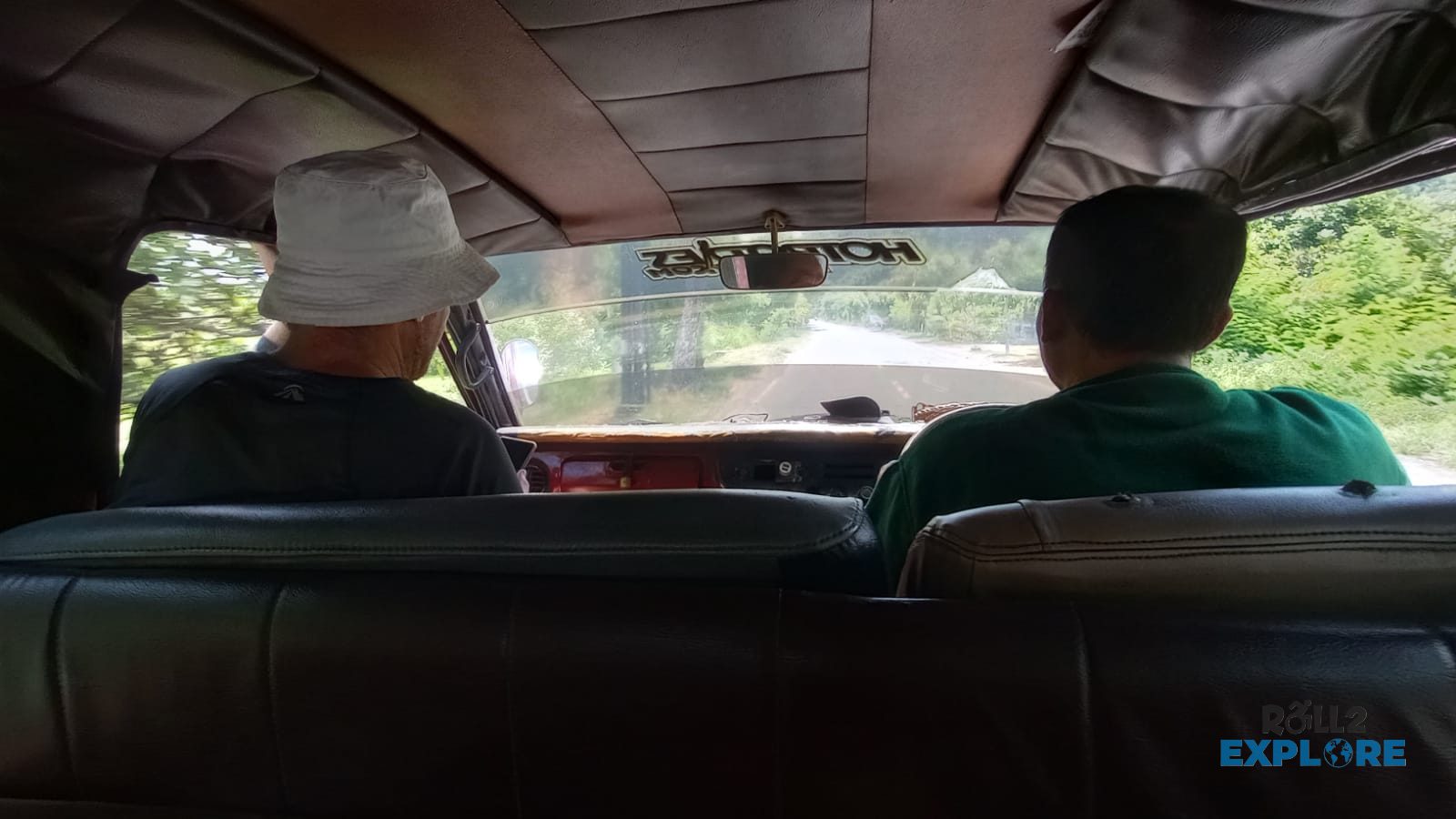
Transportation in Bali:
A Wheelchair User’s Perspective
Bali, the Island of the Gods, is a dream destination for many travelers. Its stunning beaches, lush rice terraces, and vibrant culture make it a must-visit. However, for wheelchair users, navigating Bali’s transportation system can be a challenge. While the island is not fully accessible, with some planning and knowledge, it’s still possible to enjoy a memorable trip. Here’s a guide to transportation in Bali from a wheelchair user’s perspective.
Airport Transfers: Starting Your Journey
Ngurah Rai International Airport (Denpasar) is Bali’s main airport and has made some efforts to improve accessibility. Here’s what to expect:

- Ramps and Elevators: The airport is equipped with ramps and elevators, making it relatively easy to navigate for wheelchair users. However, be prepared for some obstacles, such as poles or barriers near elevator entrances, which can occasionally make access a bit challenging.
- Assistance Services: You can request wheelchair assistance when booking your flight. Staff are generally helpful and will guide you through immigration and baggage claim. However, some low-cost airlines might charge you extra for a wheelchair assistance in Asia.
- Transport from the Airport: We recommend using Grab or Gojek for transportation from the airport. Both services are convenient, reliable, and widely used in Bali. At the airport, you’ll find dedicated Grab and Gojek Lounges where passengers can wait for drivers. Simply follow the instructions and images provided in the app to locate the pickup point. The process is straightforward, and the lounges are well-marked. From our experience, all Grab and Gojek cars we used had spacious boots, which made it easy to accommodate Nick’s non-foldable wheelchair. The drivers were helpful and patient, ensuring a smooth loading and unloading process.
- Bali Access Travel offers vehicles with ramps or lifts. We did not use their services as we prefer budget solutions.
Getting Around Bali: Options for Wheelchair Users
Bali’s public transportation system is not wheelchair-friendly, but there are alternatives:
a) Ride-Hailing Apps (Grab and Gojek)
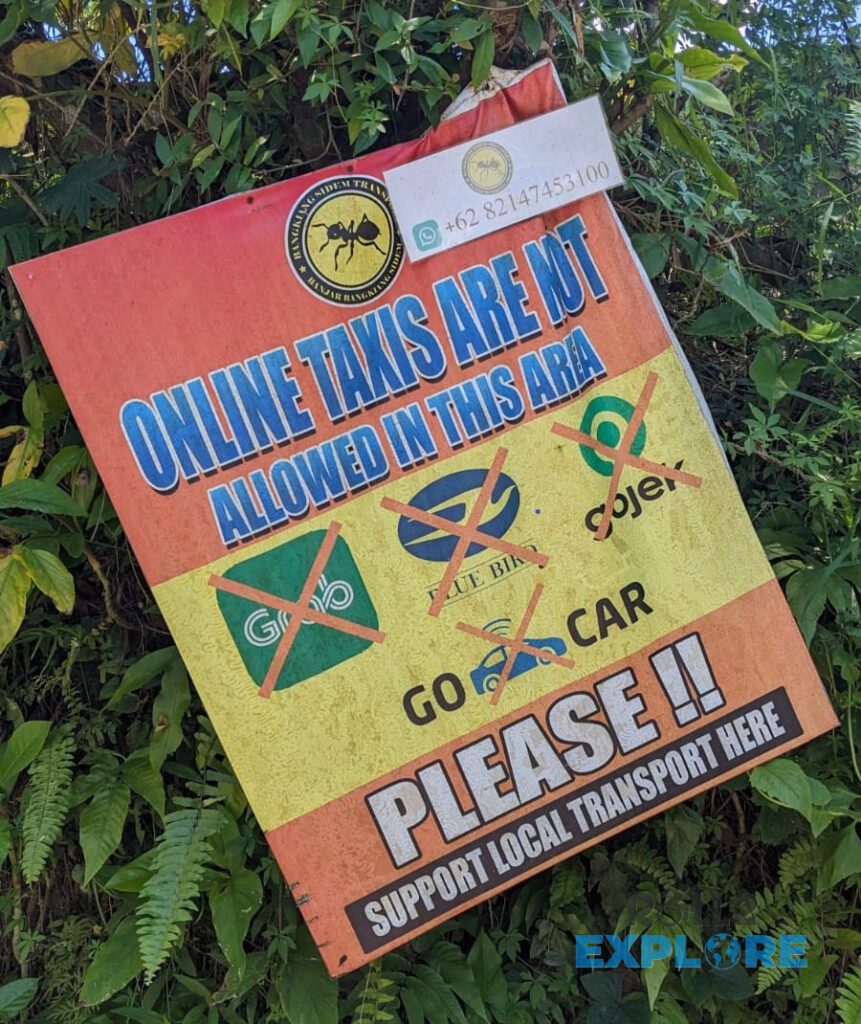
- Grab and Gojek: These are popular ride-hailing apps in Bali. While cars are not wheelchair-accessible, you can use them to transport your wheelchair if you can transfer into the car. Keep in mind that online taxis are restricted or forbidden in certain areas of Bali.
- Motorbike Taxis: Not an option for wheelchair users, as they are unsuitable for accessibility needs.
b) Accessible Taxis and Private Transfers
- Private drivers: Hiring a private driver can be more cost-effective than using online taxis, especially if you’re comfortable negotiating prices. Many private drivers in Bali speak good English and are happy to share insights about the island, including local attractions, hidden gems, and even personal stories about their lives and culture. This makes the journey not just a ride, but an enriching experience. Some companies, like Bali Access Travel, offer vans with ramps or lifts. These are the most convenient option for wheelchair users.
- Cost: Private transfers are more expensive than regular taxis but provide the necessary accessibility and comfort.
- Booking: Always book in advance, as accessible vehicles are limited.
c) Bemos
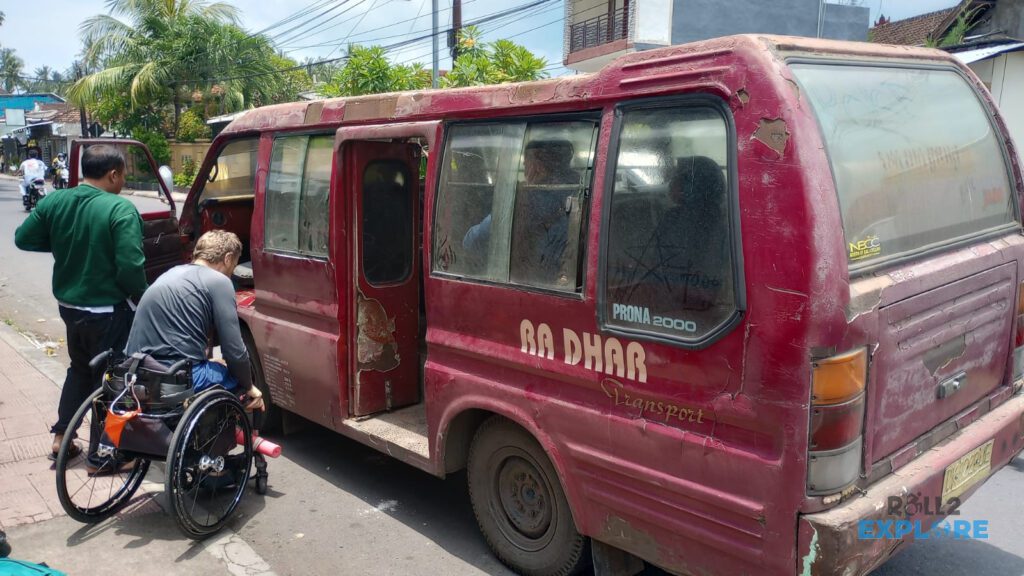
- Bemos (Minivans): These shared minivans, known as bemos, are not accessible and can often be cramped and uncomfortable. However, they are the cheapest mode of transportation in Bali, so we decided to give it a try with Nick! 😊
- The most reliable route we found is Pemuteran to Lovina/Singaraja. We believe the minivans start from Gilimanuk, though we’re not entirely sure. Bemos are easy to spot—they are typically burgundy in color. During our trip in March 2025, the bemos we observed were surprisingly empty, with only up to four passengers on the one we took.
d) Kura Kura and Perama:
- Kura Kura (a tourist bus service) and Perama (a shuttle bus service): These are not accessible means of transportation for wheelchair users. These services lack the necessary facilities, such as ramps or lifts, making it difficult or impossible for individuals with mobility challenges to board.
- Since disabled travelers often require a companion, the combined cost of two tickets can be comparable to or even higher than hiring a taxi.
- These services typically operate only once a day and involve longer travel times, which can be inconvenient for those with limited mobility or time constraints.
Transportation Costs in Bali
To help you plan your travels, here’s a breakdown of the prices that we paid/were offered for different routes using taxis, online taxis (like Grab or Gojek), and bemos. Prices may vary depending on distance, time of day, and negotiation skills, but this table provides a general idea of what to expect.
| Online taxi | Private driver / Taxi | Bemo | |
|---|---|---|---|
| Airport – Kuta | 117.900 IDR (Grab) | ||
| Kuta – Sanur | 58.700 / 69.500 IDR (Grab) | ||
| Kuta – Ubud | 173.500 IDR (Gojek) | ||
| Payangan – Bedugul | 345.500 IDR (Gojek) | 900.000 IDR (Payangan – Pemuteran with a stop in Ulun Danu Beratan Temple) | |
| Bedugul – Pemuteran | 440.000 IDR (Gojek) | 430.000 IDR | |
| Pemuteran – Lovina | 280.000 IDR (Gojek) | 350.000 IDR | 50.000 IDR per person + 50.000 IDR for wheelchair |
| Lovina – Kubu | 450.000 IDR (Gojek) | 400.000 IDR | |
Challenges of Accessibility in Bali
While Bali is working on improving accessibility, there are still significant challenges:
- Uneven Sidewalks: Sidewalks in Bali are often uneven, narrow, or obstructed by parked scooters, making it difficult for wheelchair users to navigate independently.
- Lack of Ramps: Many shops, restaurants, and attractions do not have ramps or accessible entrances. Expect a lot of stairs everywhere.
- Traffic and Roads: Bali’s roads can be chaotic, with heavy traffic and poor road conditions. This can make traveling by car or van stressful.
Final Thoughts
Transportation in Bali as a wheelchair user requires careful planning, but it’s not impossible. By booking accessible transfers, hiring a driver, and choosing wheelchair-friendly destinations, you can enjoy the beauty and culture of Bali. While the island still has a long way to go in terms of accessibility, the warm hospitality of the Balinese people and the stunning scenery make it a worthwhile destination.
Are you planning to travel to Bali as a wheelchair user? Read about our experiences and tips!
Disclaimer: Accessibility information is based on research and may vary. Always confirm with service providers before booking.