
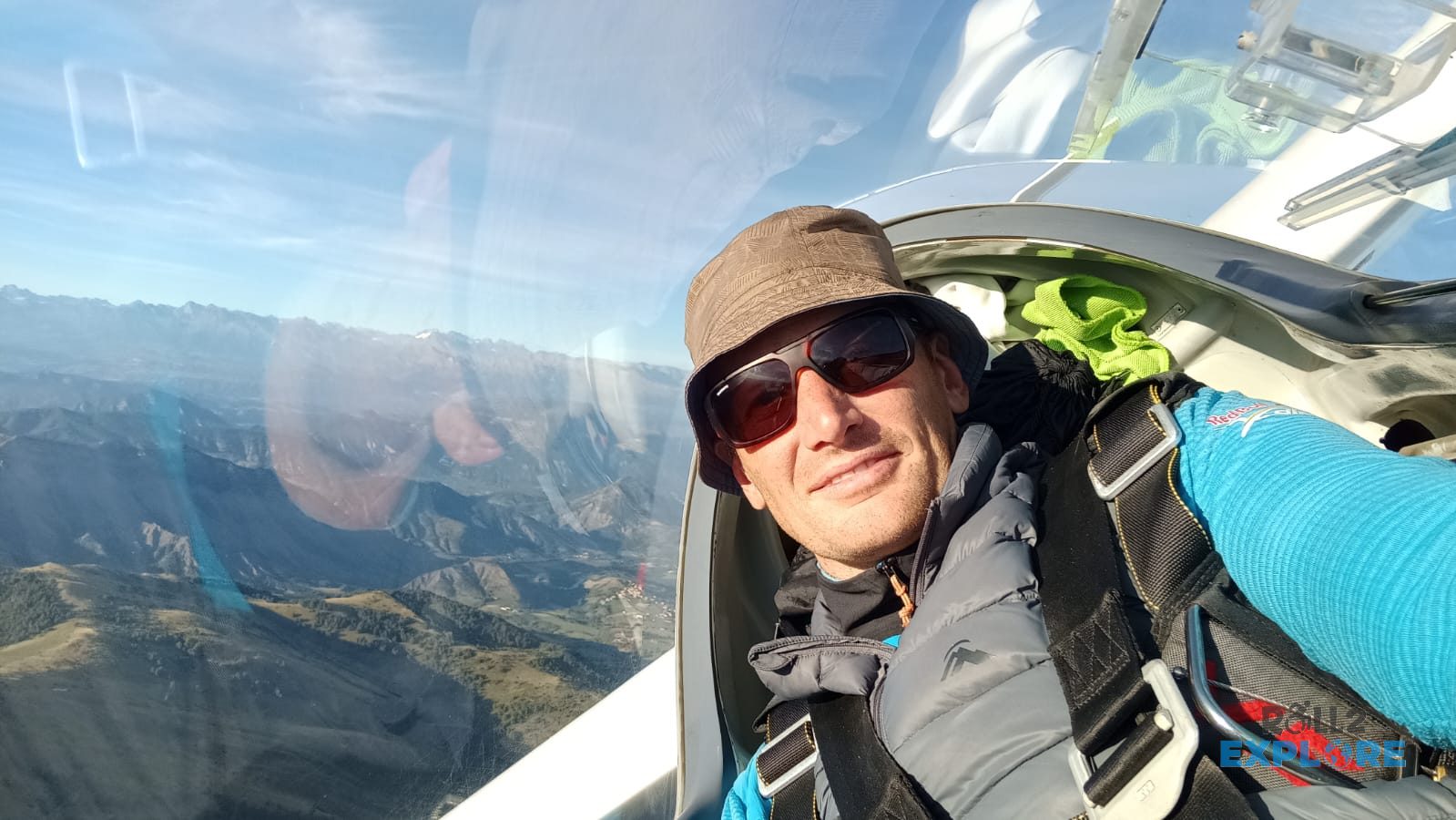
The Beauty of Gliding:
A Wheelchair User’s Perspective
Gliding might seem a distant idea for wheelchair users – an inaccessible dream for those of us with mobility challenges. But we are here to tell you that gliding is a sport that is not only attainable for wheelchair users, but it’s also one of the most freeing and rewarding experiences you can have. Let’s dive into the beauty of gliding and how it can be an inclusive sport that transcends barriers.
What Is Gliding? The Real Freedom of Flight
Gliding is not like conventional powered flight. It’s about understanding and using the natural air currents to stay in the air for hours, soaring with the birds. Instead of relying on an engine, gliders use rising air to stay aloft, a skill that requires knowledge and precision. The glider’s control surfaces are operated with a stick and rudder, and some gliders have been modified to make the rudder accessible for people using wheelchairs, operated by hands rather than feet.
Unlike other types of flying, gliding is often a club-based activity, where pilots gather at an airfield to practice, learn, and share their love for the sky. While learning, you stay close enough to the airfield to ensure you can safely return, and with experience, you can travel much longer distances.
From Paragliding to Gliding: A Perfect Transition
Before the accident, Nick was an avid paraglider. He loved the adventure of being up in the air, but paragliding has its limitations. Paragliders are slow and have fewer flying options, and landing in remote areas with a wheelchair isn’t practical.
In contrast, gliding is a community activity where everyone helps out. Whether it’s setting up the gliders, getting them ready for launch, or putting them away at the end of the day, there’s a sense of camaraderie that makes it a welcoming environment. And the best part? The operation doesn’t change whether you’re flying with a hand rudder or not. Everyone pitches in, making gliding one of the most inclusive sports for people with disabilities.
Affordability and Community: Why Gliding Works for Me
While gliding can seem expensive at first glance, it’s actually much cheaper than powered aviation. New gliders can be quite costly, but clubs often offer older gliders for hire at a much more reasonable price. In addition, the instructors are usually volunteers, and the training resources available in most clubs are top-notch.
For Nick, joining a gliding club has been a rewarding experience. The people are not only passionate about the sport but also willing to share their knowledge. It’s a community where everyone is encouraged to learn, improve, and enjoy the beauty of flight. It’s like paragliding, but for grown-ups.
Gliding with a Disability: Inclusive Options for Everyone
If you think you might want to learn to glide, many clubs offer great opportunities for both able-bodied and disabled individuals. Instruction takes place in a two-seater glider, allowing you to fly as a passenger, with or without taking control of the glider’s movements.
In Europe, there’s a process to obtain a Class 2 medical to fly solo, which includes observing you transferring in and out of the glider. But you only need this if you want to fly alone. Additionally, a few clubs have gliders with hand rudder modifications, and some gliders can even be modified to allow this feature.
Some gliders that are well-suited to hand rudder modifications include:
- ASK-21 – The classic two-seater trainer, also excellent for aerobatics
- Duo Discus – A two-seater designed for cross-country performance
- Pégase – A classic French single-seater glider, also great for cross-country
- Discus 2 CT – A performance two-seater with a sustainer motor for easy returns
Some clubs that offer hand rudder gliders in their fleet are:
- Sillas Voladoras, Spain
- La Motte Du Caire, France
- Sinsheim, Germany
- Żar, Poland
- Stalowa Wola, Poland
- Wyvern Gliding Club, England
- Lasham, England
Exploring Hand Rudder and Alternative Options
If you’re lucky enough to be flying with a club that already has hand rudder gliders, you’re all set! Otherwise, your club might look into purchasing one, as the modifications are simple and can be installed or removed quickly between flights. Disabled instructors can offer helpful tips, but any instructor can fly with you.
Another option for those looking for a bit more freedom is to look into hang gliding or microlight aviation. These aircraft often have fewer regulations when it comes to hand rudder modifications and are more adaptable for people with disabilities. While they’re slower than gliders, they offer a similar flying experience, and some even have electric self-launch capabilities.
Notable options include:
- Archaeopteryx
- Aérienne Swift (2 second hand, 3 now in production)
- 1comet (coming soon)
- Neutrino (still to be confirmed)
Visit Your Local Club and Start Your Journey
If you’re interested in gliding, the first step is to visit your local club and see what they offer. There’s a wealth of knowledge and experience waiting for you, and many clubs are eager to welcome new members.
For those with disabilities, gliding offers an incredible opportunity to experience flight like never before. It’s an accessible, supportive community, and the joy of gliding will leave you feeling free, empowered, and connected with the world around you.
A Final Thought: The Sky is Within Reach
Nick has been lucky to fly with a club that already offered hand rudder capable gliders. He’ll never forget the first time he rolled back into his gliding club post-accident, surrounded by friends and fellow pilots who had supported him before and after. Gliding, for Nick, is a reminder that no matter our challenges, the sky is ours to explore.
The sky is calling. Will you answer?
Explore other exciting accessible sports and activities to find more adventures tailored to your abilities and interests!