
Seatrac in Greece:
Accessible Beaches or Missed Potential?
A revolutionary solution born from personal need
Seatrac is one of the most ambitious inclusive tourism initiatives to come out of Greece. It’s a device designed to allow wheelchair users independent access from the beach straight into the sea. The idea came from Gerasimos Fessian, himself a wheelchair user, who lived by the coast but was frustrated by always needing help to enjoy a swim. Together with his friend Ignatius Fotiou, CEO of TOBEA (Thinking Out of the Box Engineering Applications), they developed Seatrac — a pioneering system that promised to transform the beach experience for people with limited mobility.
How does Seatrac work?
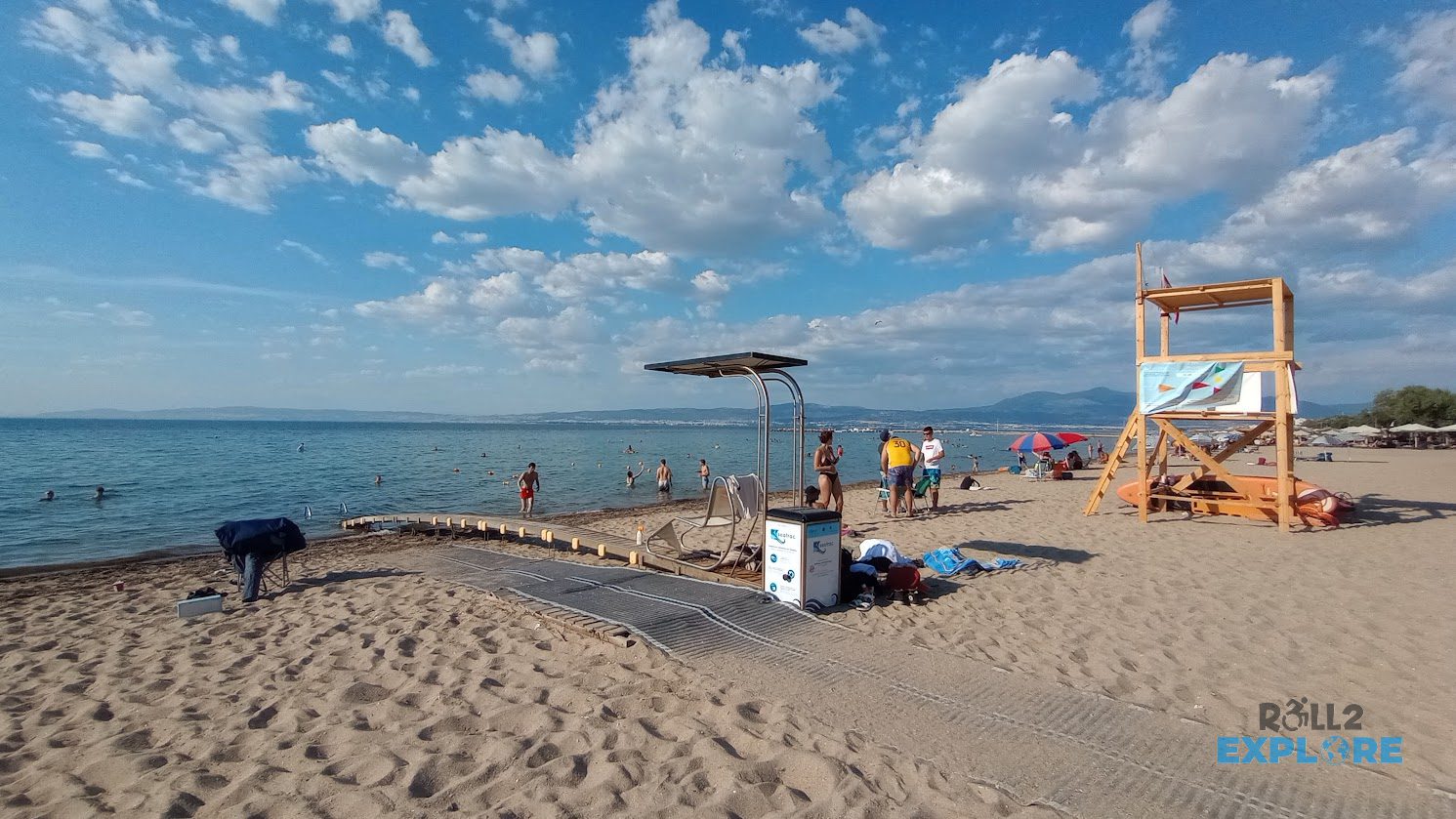
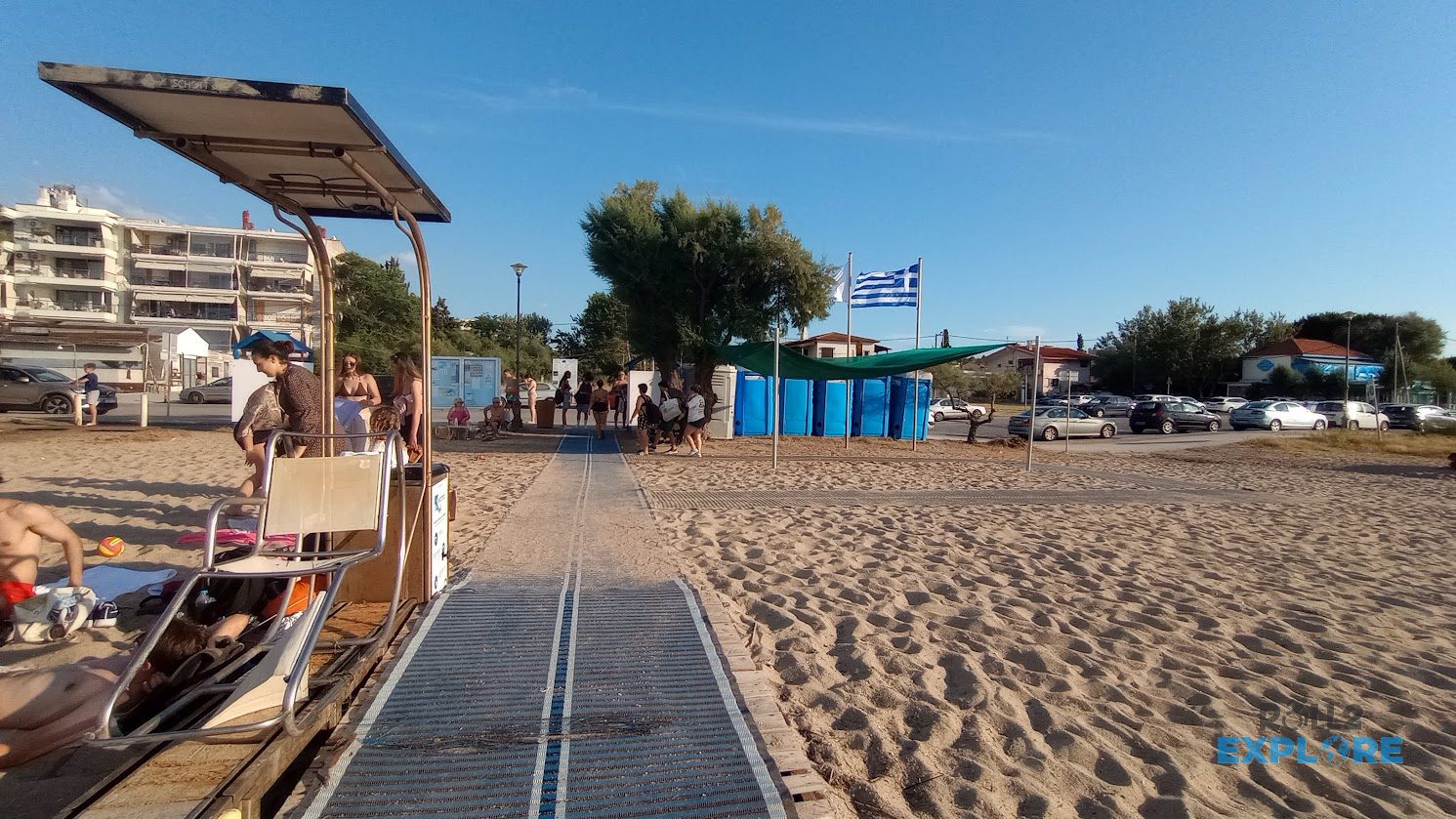
Seatrac is a solar-powered track with a motorized chair. You start by moving from your wheelchair to the Seatrac seat. With a simple remote control, you then glide smoothly along the track into the water. You can stop at any point to slip off the chair and swim. When you’re ready to return, press the button again. The chair brings you back to the beach.
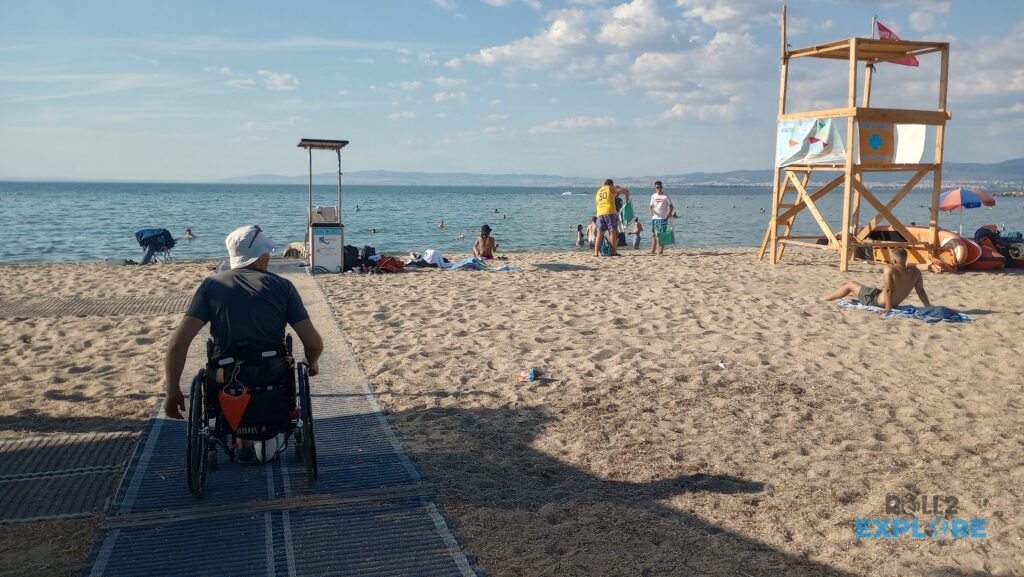
It runs entirely on solar power and stays on the beach all summer. In some places, the remote is kept by a lifeguard or at a nearby stand to prevent misuse. When we visited the beach at Thermaikos Neoi Epivates near Thessaloniki, there was no lifeguard. That meant we couldn’t use the Seatrac, even if Nick had been ready to swim.
👉 If you want to see exactly how Seatrac works in practice, you can watch the official instruction video here.
Expanding across Greece and beyond
Seatrac now operates on over 200 beaches across Greece and her islands. Its success has spread to other countries too. Italy and Croatia have installed it on a few beaches. Abu Dhabi added Seatrac to six of its busiest beaches as part of a “Beach Accessibility Project.” The city hopes this will show how serious it is about accessible tourism. But it’s still too early to know how often people use it there.
Promises vs. reality: maintenance and information gaps
The idea is fantastic, but the real impact looks mixed. Reports show that many Seatrac systems see little use — sometimes just a few visitors. Often, the only data available is already two or more years old. Maybe the data is wrong, or maybe local communities don’t promote it enough, or travelers don’t trust it yet.
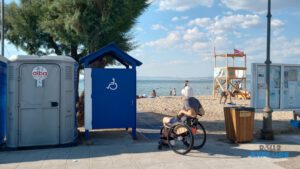
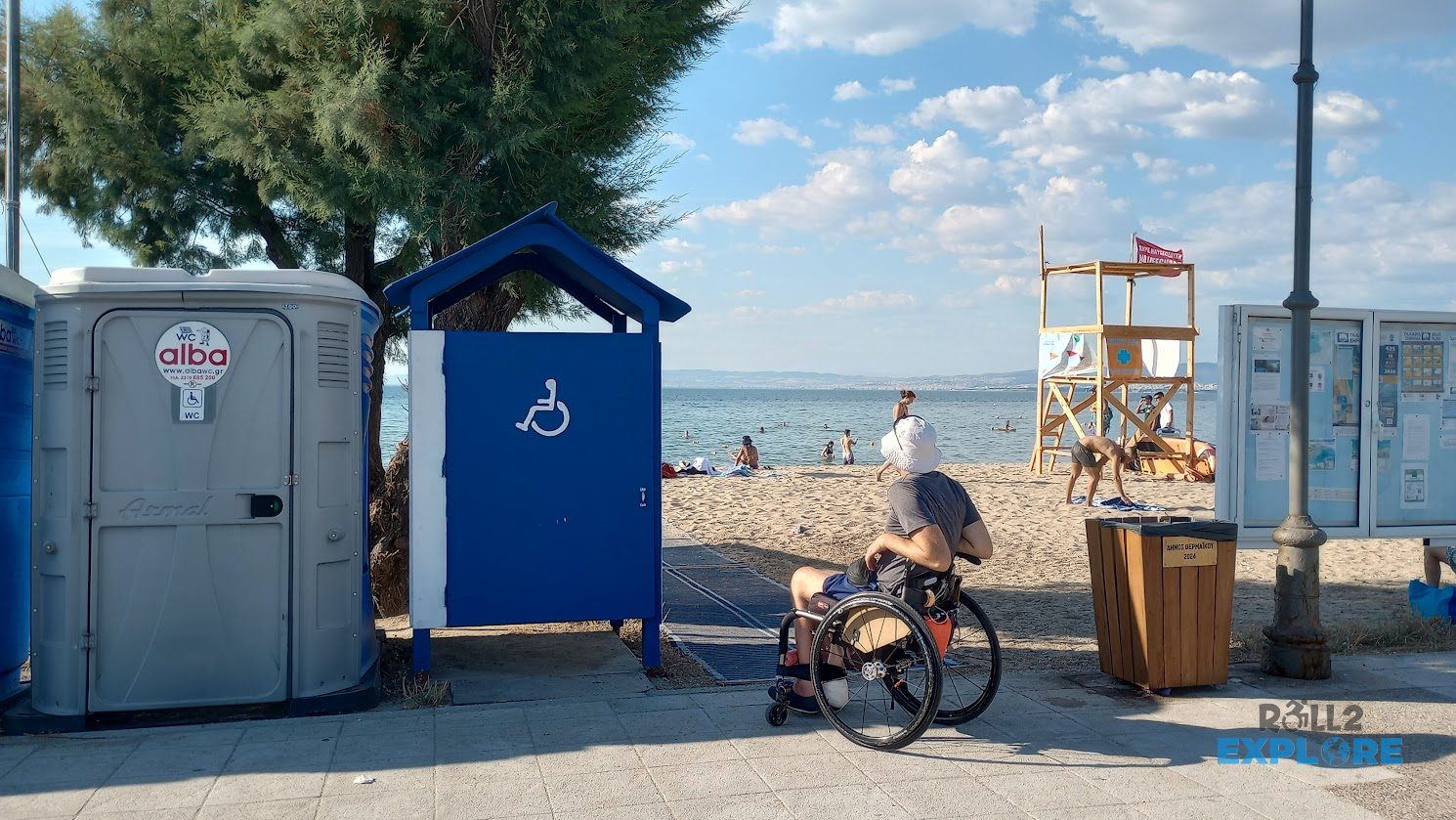
Maintenance and clear information also fall short. The Seatrac website’s blog hasn’t been updated since 2022. Many Seatracs on the official map appear in grey, meaning they are uninstalled. We found comments online, including about the beach we visited, where travelers asked if the Seatrac was even working. No one replied. Their interactive map also has errors. It showed no accessible toilet or changing room at Neoi Epivates, yet both were there. This makes us worry. What if a traveler picks a beach expecting an accessible shower or bathroom, only to arrive and find nothing?
Why aren’t more people using Seatrac?
The core idea is brilliant. But rolling out over 200 systems so quickly may not have been the best plan. A slower approach, starting with fewer, carefully chosen spots, could have worked better. That way, each system could get proper maintenance and local support. Many beaches also lack staff who can help if something breaks. Sometimes there’s not even a lifeguard to hold the remote, so visitors can’t use the Seatrac at all.
Our personal observations
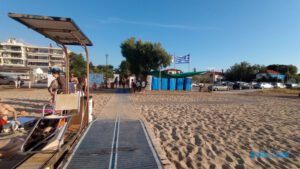
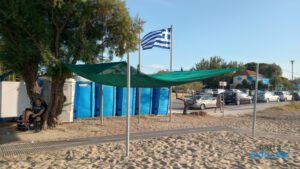
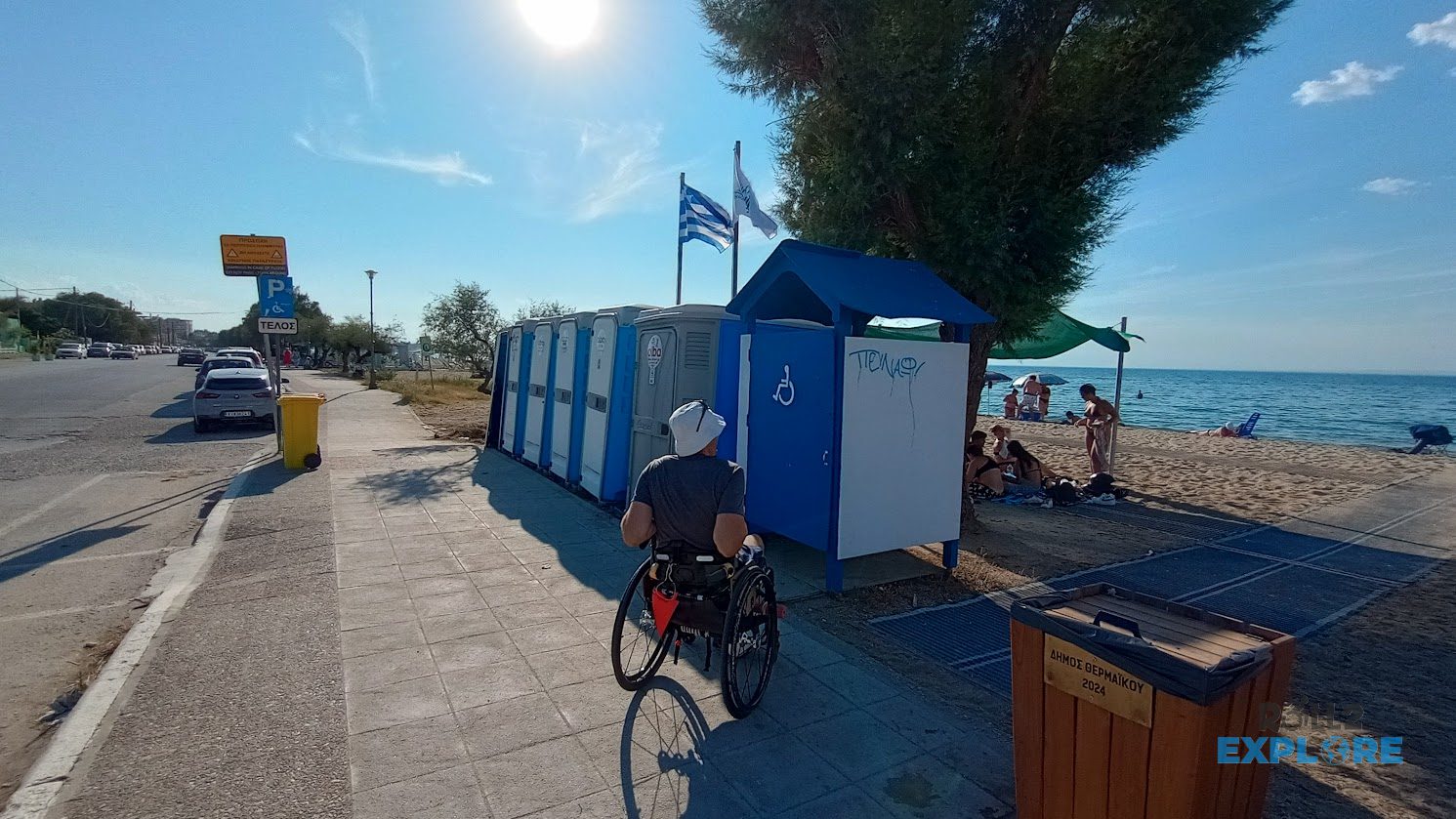
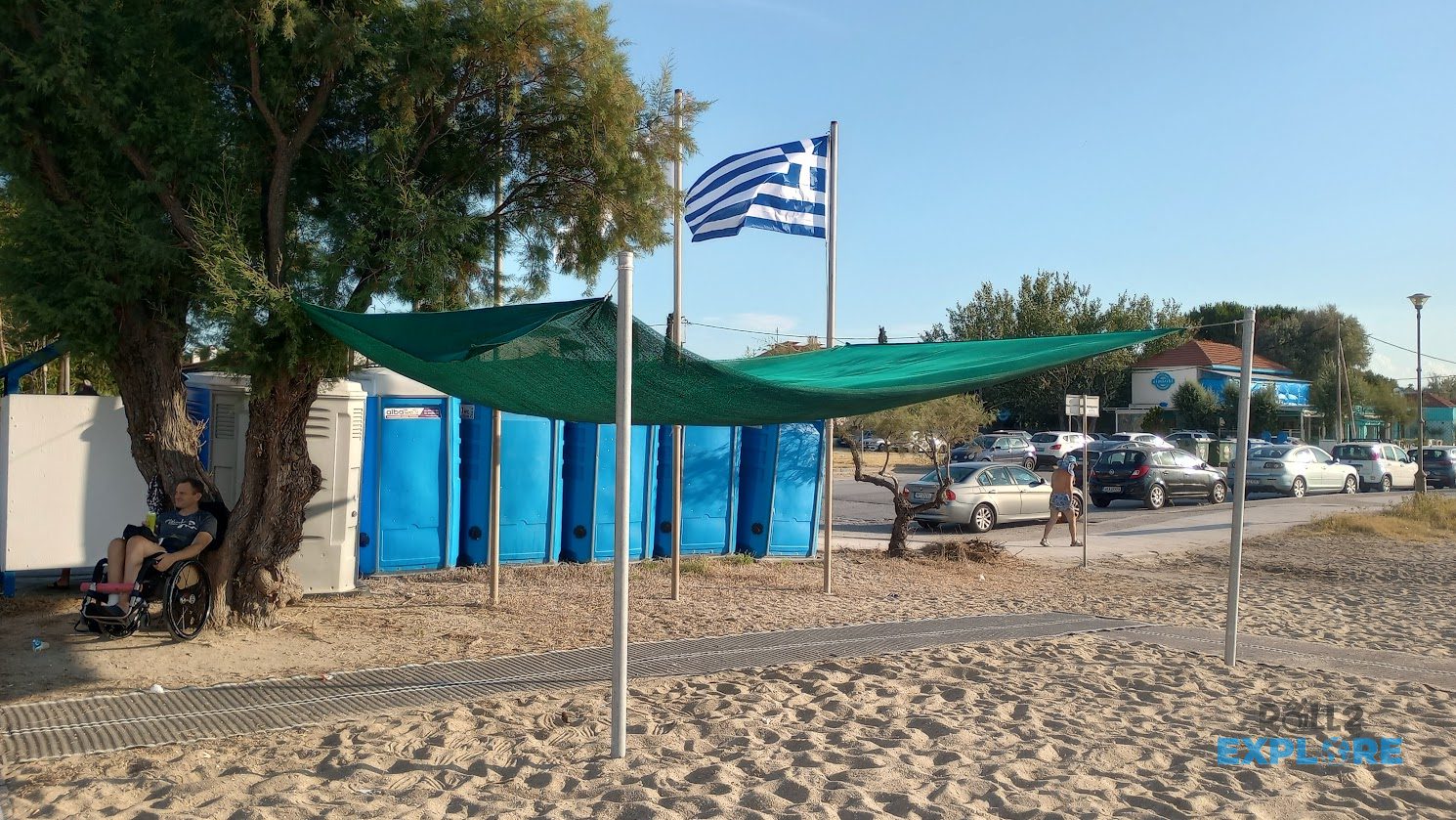
When we visited Neoi Epivates near Thessaloniki, we saw a Seatrac system in place, alongside accessible toilet, changing room, shaded area, and beach mats — contradicting what the official map claimed. We didn’t try the system, as Nick was recovering from surgery. Even if he had been ready, the lack of a lifeguard holding the remote would have made it impossible.
From our point of view, Seatrac is still an exciting idea. It has the potential to reshape coastal tourism for people with mobility impairments. But for it to truly succeed, it needs reliable maintenance, accurate public information, local oversight (like staff actually holding the remote), and long-term commitment — not just a burst of installations. Until then, we’d suggest travelers do extra homework, contact local hotels or municipal offices, and always have a backup plan, just in case.
Share your experience
We’d love to hear from you! Have you tried using Seatrac in Greece (or anywhere else)? Was it working well? Did the beach have other accessible facilities? Your stories can help other travelers decide where to go — and avoid disappointment. Feel free to leave a comment or get in touch with us.
If you’re planning a trip to Greece, you might also want to read our post on how accessible Thessaloniki is for wheelchair users. We share our own experiences there, from public transport to hospitals, to give you a realistic picture of what to expect.